Hiking
Best Hiking Gear for Beginners: What You Actually Need
Updated November 2026
Getting started with hiking should be exciting, not overwhelming.
But spend a few minutes looking at hiking gear online, and you might start wondering whether you need an expensive backpack, specialized boots, trekking poles, a hydration system, and a dozen other accessories just to walk a trail.
The good news? You probably already own some of the gear you need to start hiking.
For your first few beginner-friendly day hikes, the goal isn't to buy everything. It's to choose comfortable footwear, carry enough water, dress for the weather, and bring the supplies that help you stay safe.
As you hike more often, you'll discover which upgrades make the biggest difference.
This guide covers the best hiking gear for beginners, including what to buy first, which items can wait, and a handful of specific products worth considering.
We'll focus on day hiking rather than overnight backpacking, with practical advice for established trails, local parks, and places like the Great Smoky Mountains.
As an Amazon Associate, ReadyOutside earns from qualifying purchases.
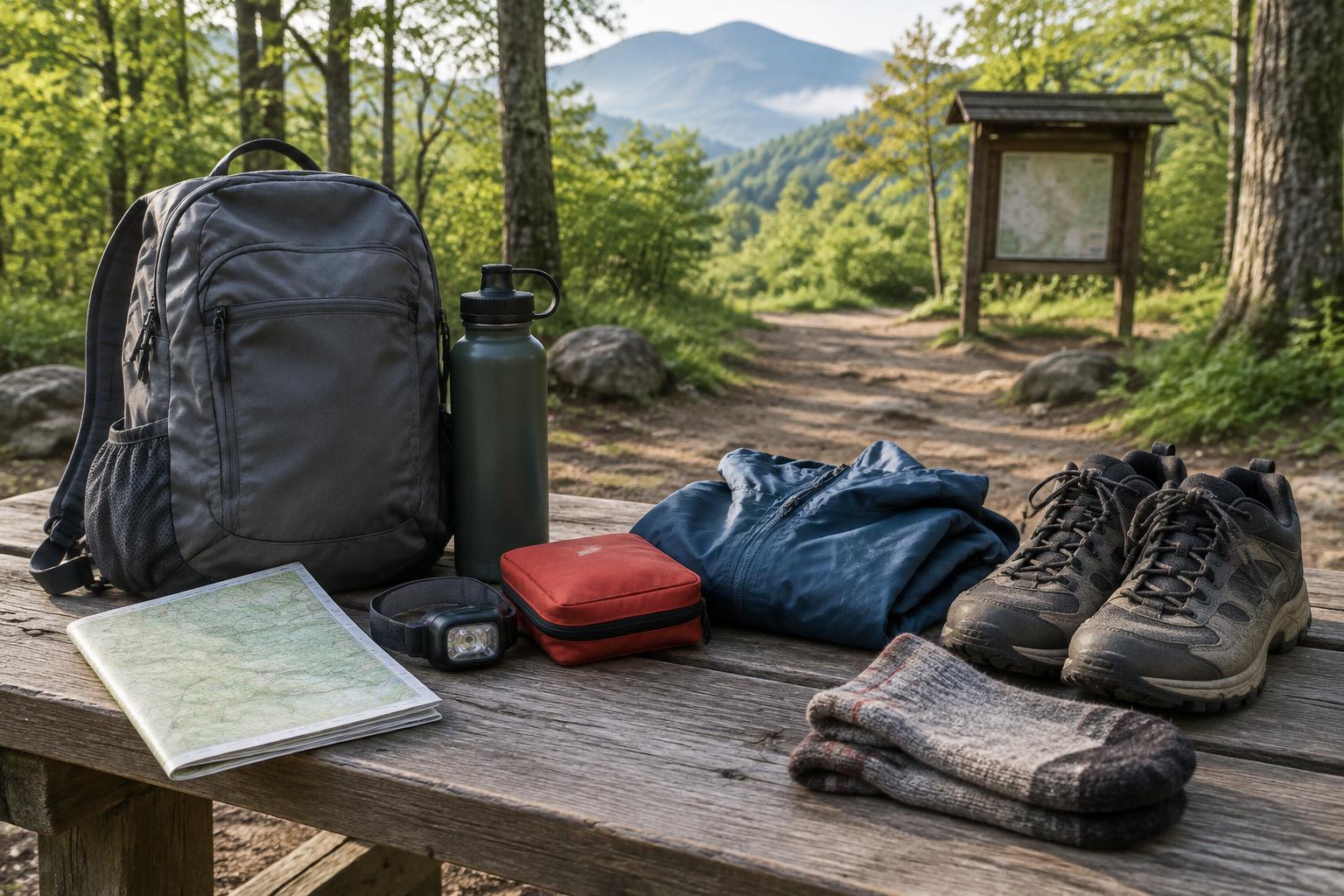
Quick Answer: What Hiking Gear Do Beginners Need?
For a typical beginner day hike, your gear should cover these basics:
| Gear | Why it matters | Buying priority |
|---|---|---|
| Comfortable trail-appropriate shoes | Traction, fit, and foot comfort | Essential |
| Moisture-wicking socks | Help manage moisture and rubbing | High |
| Small daypack | Carries water, food, layers, and safety gear | Essential for most day hikes |
| Water and snacks | Support hydration and energy | Essential |
| Weather-appropriate clothing | Helps manage temperature and exposure | Essential |
| Rain protection and extra layer | Preparedness for changing conditions | Conditions-dependent essential |
| Navigation and backup plan | Helps you stay on your intended route | Essential |
| First-aid supplies | Helps address minor injuries and blisters | Essential |
| Headlamp | Provides light if a hike takes longer than expected | Essential |
| Sun protection | Helps protect against sun exposure | Conditions-dependent essential |
| Emergency supplies | Helps you handle unexpected delays or problems | Essential |
| Trekking poles | Can improve stability and comfort | Optional |
| Water filter | Useful when carrying all needed water isn't practical | Optional for many beginner hikes |
The exact gear you carry should depend on your route, weather, distance, and how far you will be from help.
Beginner tip: Don't confuse a short hike with a risk-free hike. Even familiar trails can become challenging when weather changes, someone gets injured, or the group takes a wrong turn.
1. Hiking Shoes: Start With Comfort and Traction
Footwear is one of the first things beginners consider buying.
And while good hiking footwear matters, you don't automatically need heavy hiking boots.
For short, dry, well-maintained trails, comfortable athletic shoes with appropriate traction may be sufficient.
As trails become rockier, muddier, steeper, or more uneven, footwear designed for hiking becomes more useful.
Hiking Shoes vs. Boots
Hiking shoes are generally lower-cut and relatively lightweight. They can be a practical choice for established day-hiking trails.
Trail-running shoes offer another lightweight option, especially for hikers who prefer flexibility.
Hiking boots may provide additional coverage, a more structured fit, or protection for rougher conditions.
However, boots aren't automatically the best choice for every beginner, and ankle coverage doesn't guarantee protection from injuries.
What to Look For
Before choosing a brand, consider:
- Comfortable fit without pinching
- Enough toe room for downhill walking
- Suitable traction for your expected trails
- A secure heel without excessive slipping
- Weight and flexibility that feel comfortable
- Appropriate protection for rocks, mud, and weather
Try footwear with the socks you intend to wear hiking.
And don't make your first substantial hike the first time you wear a new pair.
Our recommendation: Start with footwear that fits well and matches your trail. If your existing athletic shoes are appropriate for easy trails, you may not need to buy hiking shoes immediately.
For a deeper explanation, read our guide to What to Wear Hiking.
2. Hiking Socks: A Small Upgrade That Can Make a Big Difference
Socks aren't the most exciting piece of hiking gear, but they're worth paying attention to.
During a hike, your feet experience repeated movement, pressure, and moisture.
Poorly fitting socks can bunch up, hold moisture, and contribute to uncomfortable rubbing.
Look for socks made with merino wool blends or moisture-wicking synthetic materials.
These fabrics generally manage moisture better than traditional cotton socks.
Product Worth Considering: Darn Tough Hiker Micro Crew
The Darn Tough Hiker Micro Crew Midweight with Cushion is a hiking-specific sock option for people who want a combination of cushioning, durability, and moisture management.
Its micro-crew height works with many hiking shoes and boots, while the midweight construction may appeal to hikers who prefer more cushioning.
Why consider it: A practical upgrade for hikers who regularly experience uncomfortable socks or want dedicated trail footwear accessories.
Keep in mind: Midweight cushioning can feel warm in hot weather or too bulky in snug shoes. Fit and thickness matter more than brand recognition.
You don't need premium hiking socks to enjoy your first trail. A comfortable pair of suitable synthetic athletic socks may work well while you're getting started.
3. Daypacks: How Much Backpack Do Beginners Need?
A backpack makes it easier to carry water, snacks, extra clothing, and emergency supplies without filling your pockets.
For many beginner day hikes, a pack in the approximate 15–25-liter range is a useful starting point.
Shorter outings may need less capacity, while colder conditions, family gear, or longer hikes may require more.
What Matters in a Daypack?
Look for:
- Comfortable shoulder straps
- A size appropriate for your gear
- Easy access to water
- Space for a rain jacket and extra layer
- Secure pockets for smaller items
- A fit that feels comfortable when loaded
You don't need a backpack designed for overnight trips.
Product Worth Considering: Osprey Daylite Plus 20L
The Osprey Daylite Plus 20L is a compact backpack worth considering for everyday use and beginner day hikes.
Its 20-liter capacity makes it a practical size for water, snacks, layers, and smaller essentials.
Why consider it: A versatile daypack that can also be useful for travel and everyday activities.
Keep in mind: A 20-liter pack may be too small for bulky cold-weather clothing or carrying gear for multiple people. Try it loaded before committing to longer outings.
Another Option: REI Co-op Flash 22
The REI Co-op Flash 22 is another lightweight daypack option, with slightly more capacity.
It's worth comparing if you prefer a simple pack designed around day hiking.
Our recommendation: If you already own a comfortable small backpack that holds your essentials securely, use it first. Upgrade when you know what features you're missing.
4. Water Bottles and Hydration: Keep It Simple
Water is essential on every hike.
For beginners, a reusable water bottle is often the easiest place to start.
You don't need a hydration reservoir or specialized bottle immediately.
Water Bottles
Advantages include:
- Easy to refill and clean
- Simple to monitor remaining water
- Familiar to use
- Affordable if you already own one
The downside is that you may need to stop or reach into your pack to drink.
Hydration Reservoirs
Hydration reservoirs carry water inside your backpack and allow you to drink through a hose.
They can make frequent drinking convenient, but they also require more cleaning and can be harder to monitor at a glance.
How Much Water Should You Bring?
There isn't one perfect amount for every hike.
Your needs depend on temperature, humidity, duration, elevation gain, pace, and individual factors.
Plan your water supply before leaving, carry an appropriate reserve, and don't assume a stream will provide safe drinking water.
Our recommendation: Start with reusable bottles and carry enough water for your planned outing, plus a margin for delays.
5. Hiking Clothing and Layers: Use What You Already Own
One of the biggest beginner gear mistakes is assuming you need an entirely new hiking wardrobe.
For many mild-weather hikes, comfortable athletic clothing can work well.
Focus on:
- Breathable shirts
- Comfortable pants, shorts, or leggings
- Clothing that allows movement
- Moisture management
- Sun and insect protection when needed
- An extra layer for cooler conditions
Why Layering Matters
A simple hiking clothing system includes:
Base layer: Helps manage moisture next to your skin.
Mid layer: Provides insulation when temperatures drop.
Outer layer: Helps protect against wind and rain.
You may not need all three layers during a warm hike, but carrying appropriate protection is important when conditions could change.
Cotton clothing can be comfortable on a short, dry walk, but it retains moisture and may become a problem in cold or wet conditions.
Our recommendation: Use suitable clothing you already own before purchasing expensive hiking-specific apparel.
For seasonal outfit examples, see What to Wear Hiking.
6. Rain Protection: Don't Let a Forecast Surprise You
A lightweight rain jacket can be one of the most useful pieces of gear in your backpack.
This is especially true in mountain environments, where conditions may differ considerably between the trailhead and higher elevations.
Look for a jacket with:
- Appropriate waterproof protection
- A comfortable hood
- Room for an insulating layer
- Freedom of movement
- Ventilation when possible
A water-resistant windbreaker isn't necessarily a substitute for a waterproof rain jacket during sustained rain.
You don't need the most expensive jacket available, but you do need protection suited to the conditions.
Important: Rain gear does not make hiking during lightning or severe weather safe. Change your plans when conditions become hazardous.
7. Navigation: Your Phone Is Helpful, but It Needs a Backup
Many beginners use smartphone maps to find and follow trails.
That can work well, but cell service isn't guaranteed in outdoor areas.
Before leaving:
- Confirm your trail and route
- Download offline maps when available
- Check trail closures and current conditions
- Charge your phone
- Carry a suitable backup navigation method
- Tell someone where you're going and when you expect to return
A paper map and compass are useful when you know how to use them.
For more remote hikes, a satellite communicator or personal locator beacon may be appropriate.
Our recommendation: Don't rely solely on a live internet connection or assume your phone battery will last indefinitely.
For help preparing your route, read How to Plan Your First Hike.
8. First-Aid Kits: Prepare for the Small Problems
You don't need to carry an enormous medical bag on a beginner hike.
But basic first-aid supplies can help with common issues such as small cuts, scrapes, and blisters.
A practical beginner kit may include:
- Adhesive bandages
- Blister treatment
- Sterile gauze
- Medical tape
- Antiseptic wipes
- Personal medications
- Any prescribed emergency medication
- Gloves and other supplies appropriate to your training
Review your kit periodically and replace expired or used items.
Product Worth Considering: Adventure Medical Kits Ultralight/Watertight .5
The Adventure Medical Kits Ultralight/Watertight .5 is a compact first-aid kit designed for lightweight outdoor travel.
It offers a convenient starting point for carrying common first-aid supplies without assembling everything from scratch.
Why consider it: A compact, organized kit that fits into a daypack.
Keep in mind: Preassembled kits aren't complete solutions for every person or emergency. Check the actual contents and supplement them with personal medications, blister supplies, and other items relevant to your needs.
Knowing how to use your first-aid supplies matters as much as owning them.
9. Headlamps: Small Gear With an Important Purpose
A headlamp may seem unnecessary if you're planning to finish hiking before sunset.
But unexpected delays happen.
A wrong turn, slower pace, injury, or late start can leave you on the trail longer than planned.
A headlamp allows you to illuminate the trail while keeping your hands free.
What to Look For
Consider:
- Comfortable headband
- Multiple brightness settings
- Reliable battery power
- Weather resistance
- Simple controls
- A practical backup power plan
Product Worth Considering: Black Diamond Spot 400
The Black Diamond Spot 400 is a headlamp option with a manufacturer-rated maximum output of 400 lumens.
It offers multiple lighting modes in a compact design.
Why consider it: A dedicated light suitable for hikers who want something more practical than relying on a phone flashlight.
Keep in mind: Maximum brightness doesn't indicate how long a light will run at that setting. Check the manufacturer's runtime information, learn the controls, and carry appropriate backup power.
Our recommendation: A dependable basic headlamp is a worthwhile purchase even if you don't plan to hike after dark.
10. Trekking Poles: Helpful, but Not Mandatory
Trekking poles are one of those pieces of gear that some hikers love and others rarely use.
They can help with balance, uneven ground, and distributing effort during climbs and descents.
They may be particularly useful on trails with repeated elevation changes.
However, beginners don't automatically need trekking poles for short, easy walks.
Product Worth Considering: Cascade Mountain Tech Aluminum Quick Lock Trekking Poles
The Cascade Mountain Tech Aluminum Quick Lock Trekking Poles are an adjustable option for hikers interested in trying poles without immediately investing in a premium model.
The quick-lock adjustment system allows the poles to be resized for different users and terrain.
Why consider them: An approachable option for experimenting with trekking poles on established trails.
Keep in mind: Trekking poles require practice. They aren't a substitute for appropriate footwear, good balance, or choosing a trail within your abilities.
Our recommendation: Consider poles after you've experienced a few hikes and know whether uneven terrain or descents make them useful for you.
11. Water Filters: Useful for Longer Adventures
For most beginner day hikes, carrying your water from the trailhead is the simplest approach.
A water filter becomes more useful when you plan longer routes or need to refill from natural sources.
Product Worth Considering: Sawyer Squeeze Water Filtration System
The Sawyer Squeeze is a portable water filtration system designed to filter water from suitable freshwater sources.
Its compact design makes it an option for hikers who want to reduce the amount of water they carry on longer outings.
Why consider it: A lightweight way to filter water when your route includes reliable freshwater sources.
Keep in mind: Filters have treatment limitations. A filter should not be assumed to remove viruses or chemical contaminants unless its specifications explicitly support those claims. Learn proper use, maintenance, and freeze protection.
Never assume that clear-looking water is safe to drink.
Our recommendation: Beginners should carry the water they need whenever practical. Learn water-treatment methods before depending on natural sources.
12. Don't Forget the Ten Essentials
The Ten Essentials are a framework for outdoor preparedness.
They help hikers think beyond the items they expect to use and prepare for situations that don't go according to plan.
The categories include:
- Navigation
- Sun protection
- Extra clothing and insulation
- Illumination
- First-aid supplies
- Fire-starting supplies
- Repair tools
- Extra food
- Water and appropriate treatment
- Emergency shelter
You don't necessarily need a large or expensive version of every item.
For example, emergency shelter for a day hike might be a compact emergency bivy or blanket appropriate to your conditions rather than a full camping tent.
What matters is carrying suitable equipment for the trail, conditions, and potential emergencies—and knowing how to use it.
A whistle, identification, personal medication, and a plan shared with someone at home are also practical additions.
For more on outdoor preparedness, see Hiking Safety for Beginners.
13. What Hiking Gear Can Beginners Skip?
Outdoor gear marketing can make it seem like every accessory is essential.
In reality, there are several purchases you can postpone.
Expensive GPS Watches
A specialized watch can provide useful navigation and activity features, but it's not required for ordinary beginner hikes.
Learn route planning and basic navigation first.
Large Backpacking Packs
A 50-liter or larger backpack is unnecessary for most simple day hikes.
Choose a daypack that matches your actual gear.
Premium Trekking Poles
You can try affordable poles or hike without them before deciding whether a premium pair is worthwhile.
Specialized Hiking Clothing for Every Season
Start with clothing suited to the season you're hiking in.
Build your wardrobe gradually as your needs change.
Water Filtration Systems for Every Short Hike
If you're hiking a short route and carrying adequate water, you may not need to buy a filter yet.
Expensive Multi-Tools
A simple, appropriate tool may be enough for many day hikes. Choose tools based on your skills and actual needs.
The goal is to buy gear that solves a problem, not gear that simply looks useful.
14. Building a Beginner Hiking Kit on a Budget
You don't need to buy everything at once.
Start by checking what you already own.
| Category | Start with what you have | Upgrade when |
|---|---|---|
| Footwear | Comfortable shoes with suitable traction | You need better grip, fit, or protection |
| Socks | Comfortable moisture-wicking athletic socks | You experience rubbing or want dedicated hiking socks |
| Backpack | Small, comfortable backpack | You need better fit, organization, or capacity |
| Water | Reusable bottles | You want easier drinking or more capacity |
| Clothing | Breathable workout clothes | Conditions require specialized protection |
| Rain gear | Existing suitable rain jacket | It doesn't provide enough weather protection |
| First aid | Properly stocked compact kit | Your trips or needs become more demanding |
| Headlamp | Reliable basic headlamp | You need different runtime or lighting features |
| Trekking poles | None initially | You find them useful on uneven terrain |
| Water filter | Carry adequate treated water | Longer routes require dependable refilling |
Where Should You Spend First?
If your budget is limited, prioritize purchases that address comfort and safety.
Well-fitting footwear, appropriate socks, weather protection, water capacity, and basic emergency supplies are sensible priorities.
A headlamp and first-aid kit are particularly useful because they help you prepare for problems you hope never happen.
Avoid spending heavily on optional accessories before you know what your hiking routine will look like.
15. Common Beginner Hiking Gear Mistakes
Buying Boots Without Trying Them On
A popular hiking boot isn't necessarily the right boot for your feet.
Comfort, fit, and terrain suitability matter more than popularity.
Carrying Too Much Gear
Overpacking makes a hike less comfortable.
Bring the essentials and appropriate emergency supplies, but avoid carrying unnecessary duplicates and bulky accessories.
Choosing a Backpack Based Only on Capacity
A backpack with plenty of space can still be uncomfortable.
Fit and load distribution matter.
Forgetting Weather Protection
A warm forecast at home doesn't always reflect conditions at higher elevations.
Check the forecast for the actual trail and bring suitable layers.
Depending Entirely on a Phone
Phones can lose battery power, break, or lose signal.
Prepare offline information and an appropriate navigation backup.
Buying Gear Without Learning to Use It
A water filter, compass, trekking poles, or first-aid kit is only useful when you understand its limitations and proper use.
Test new equipment before relying on it.
Waiting Until the Last Minute to Pack
Pack the night before your hike.
Check batteries, water capacity, weather, and trail conditions before leaving.
16. Beginner Hiking Gear for the Great Smoky Mountains
The Great Smoky Mountains offer wonderful opportunities for beginner hikers, but they also demonstrate why gear choices should match the trail.
A short walk near a visitor center is different from a longer mountain hike with significant elevation gain.
Weather can change, trails may be wet or rocky, and cellular service is limited in many areas.
For a typical beginner-friendly Smokies day hike, focus on:
- Footwear with suitable traction
- Water and snacks
- A comfortable daypack
- Rain protection
- An extra layer when conditions warrant
- Navigation information
- A headlamp
- First-aid and emergency supplies
Check current National Park Service alerts and trail conditions before leaving.
Be aware of wildlife, keep your distance, and follow park guidance for food storage and encounters.
A popular trail isn't necessarily an easy trail. Consider elevation gain, distance, and weather rather than choosing solely from photographs.
If you're planning your first outing, start with How to Plan Your First Hike.
Frequently Asked Questions
What is the most important hiking gear for beginners?
Comfortable footwear, water, weather-appropriate clothing, navigation, and suitable safety supplies are among the most important items. The exact gear depends on the trail and conditions.
Do beginners need expensive hiking boots?
No. Many beginners can start with comfortable athletic shoes or hiking shoes suited to their trail. Boots may become useful for rougher conditions or personal preferences.
What size backpack is best for beginner day hiking?
A pack around 15–25 liters works for many beginner day hikes. Shorter outings may need less space, while cold-weather or longer hikes may require more.
Do I need trekking poles for my first hike?
Not necessarily. Trekking poles can help with stability and comfort on uneven terrain, but many easy trails can be enjoyed without them.
Is a hydration backpack better than water bottles?
Neither is universally better. Hydration reservoirs make drinking convenient while moving, while bottles are simple to clean and let you see how much water remains.
Can I start hiking with gear I already own?
Yes. If your shoes, clothing, backpack, and other supplies are appropriate for the conditions, you may already have much of what you need. Make sure you still carry adequate water, navigation, and safety essentials.
How much should beginners spend on hiking gear?
There's no required spending amount. Start with suitable equipment you already own, purchase missing safety essentials, and upgrade gradually as you discover your needs.
Final Thoughts: Start With the Essentials, Not the Extras
Your first hike doesn't need to begin with a shopping spree.
Start with comfortable shoes, suitable clothing, enough water, a practical backpack, and the supplies needed for the trail and conditions.
Then get outside and learn what works for you.
You may discover that better socks make a noticeable difference. Or that a smaller backpack is more comfortable. Maybe trekking poles become useful as you explore hillier trails.
Those experiences will help you make smarter purchases than any generic shopping list.
The best hiking gear for beginners isn't necessarily the most expensive gear. It's the equipment that helps you stay comfortable, prepared, and confident on the trail.
Editorial note: Product recommendations are based on research and publicly available product information, not personal hands-on testing. Product specifications, availability, and prices may change. Always choose equipment appropriate for your experience, trail conditions, and individual needs.
Keep Exploring
Hiking for Beginners
Get started with the fundamentals.
Read the guide →
How to Plan Your First Hike
Choose a trail and prepare for your first outing.
Read the guide →
What to Bring on a Day Hike
Build your day-hiking packing list.
Read the guide →
What to Wear Hiking
Choose shoes, clothing, and layers.
Read the guide →
Hiking Safety for Beginners
Learn essential trail safety habits.
Read the guide →