Hiking
What to Wear Hiking: A Beginner's Guide to Shoes, Clothing & Layers
Updated November 2026
One of the first questions new hikers ask is surprisingly simple: What should I wear hiking?
Do you need hiking boots? Are regular sneakers okay? Should you wear shorts or pants? And what happens when the morning starts chilly but the afternoon turns warm?
The good news is that you don't need an expensive outdoor wardrobe to start hiking.
For many beginner-friendly trails, you can put together a comfortable hiking outfit using clothing you already own.
The key is choosing footwear and clothing that match the weather, trail conditions, and amount of effort involved.
In this guide, we'll walk through what to wear hiking from head to toe, including shoes, socks, pants, shirts, layers, and rain protection. We'll also look at how to dress for different seasons and which common clothing mistakes to avoid.
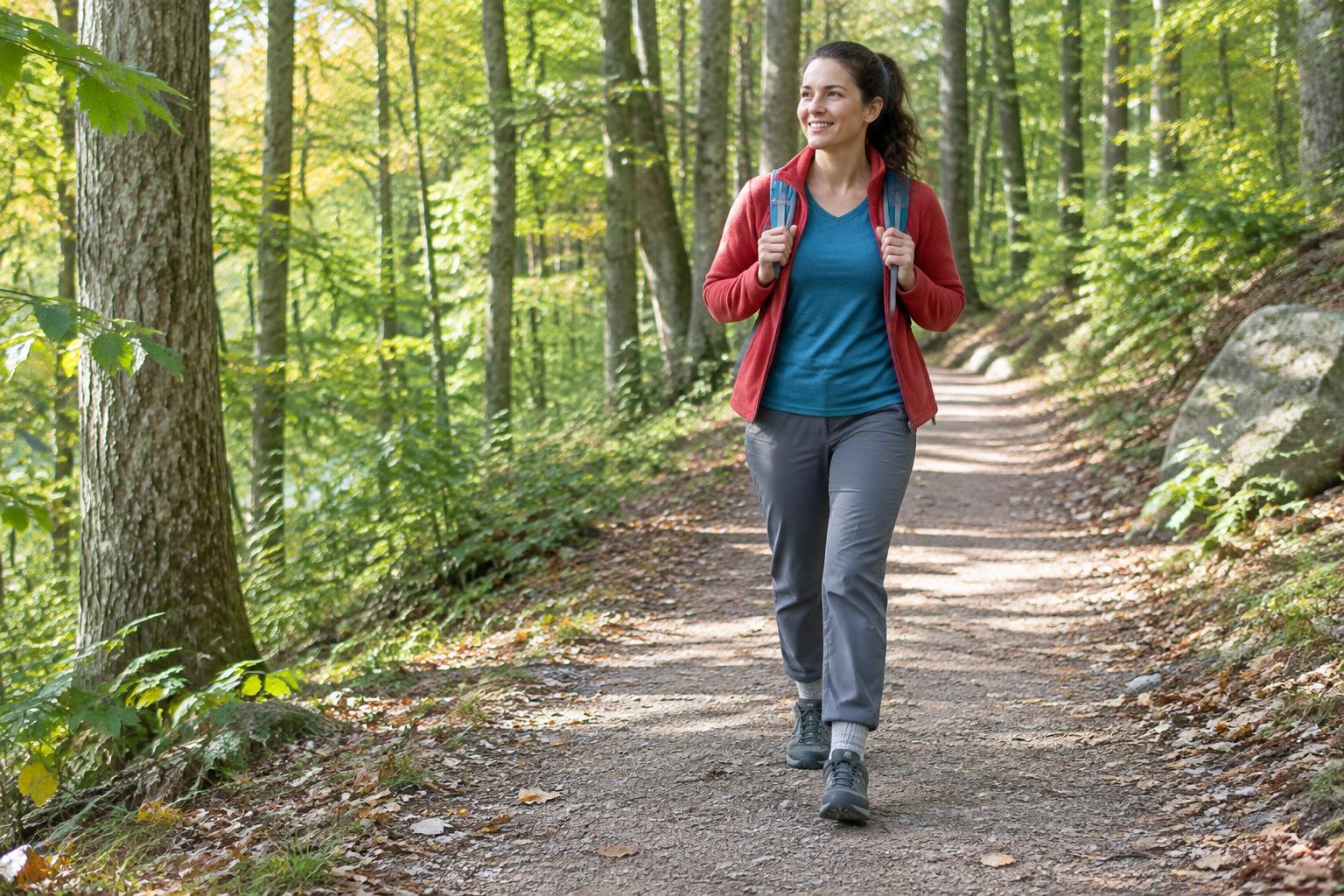
Quick Answer: What Should You Wear Hiking?
For a typical beginner day hike in mild weather, start with:
- Shoes: Comfortable athletic shoes with suitable traction or hiking shoes
- Socks: Moisture-wicking synthetic or wool-blend socks
- Shirt: Breathable, moisture-wicking T-shirt
- Pants or shorts: Comfortable clothing that allows unrestricted movement
- Extra layer: Lightweight fleece or other insulating layer when temperatures warrant it
- Rain protection: A rain jacket if wet weather is possible
- Sun protection: Hat, sunglasses, and sunscreen as appropriate
You don't need every item on every hike.
A short, dry, well-maintained nature trail requires different clothing than a rocky mountain trail with changing weather.
The best hiking outfit is the one that keeps you comfortable, allows you to move freely, and protects you from the conditions you'll actually encounter.
1. Hiking Shoes vs. Hiking Boots: Which Do Beginners Need?
Footwear is usually the biggest question for first-time hikers.
You may see experienced hikers wearing everything from lightweight trail-running shoes to heavy-duty boots.
That's because different trails call for different footwear.
Regular Athletic Shoes
For short, dry, well-maintained trails, comfortable athletic shoes may be enough.
They're familiar, lightweight, and often already in your closet.
However, ordinary running shoes may lack traction on mud, wet rocks, or loose terrain.
They're also not necessarily designed for repeated contact with rough surfaces.
Best for: Easy nature trails, dry paths, and short introductory hikes.
Hiking Shoes
Low-cut hiking shoes are a popular option for beginners who want footwear designed for trail use without the bulk of traditional boots.
They typically offer:
- Outsoles designed for trail traction
- More durable construction than many everyday sneakers
- Protection against rocks and uneven surfaces
- A relatively lightweight feel
They can be a practical choice for regular day hiking.
Best for: Maintained dirt trails, moderate terrain, and hikers who prefer lightweight footwear.
Trail-Running Shoes
Trail runners are another option worth considering.
They're designed for movement over uneven terrain and often feature aggressive tread patterns.
Many hikers appreciate their lighter weight and flexibility.
The tradeoff is that some models provide less protection against sharp rocks or rough contact than sturdier hiking shoes.
Best for: Hikers who prioritize lightweight footwear and are comfortable with a more flexible shoe.
Hiking Boots
Hiking boots generally offer more coverage around the ankle, and some models provide a stiffer sole or additional protection.
They may be useful for rough terrain, cold conditions, or hikers who prefer a more structured fit.
However, boots aren't automatically safer than hiking shoes.
Ankle coverage alone doesn't guarantee protection against sprains, and heavy boots can feel tiring on easy trails.
Best for: Rougher terrain, certain cold-weather conditions, or personal comfort preferences.
Which Should You Choose?
For many beginners starting on established day-hiking trails, comfortable hiking shoes or suitable athletic shoes are reasonable starting points.
You can decide whether boots make sense as you gain experience.
Focus on fit, comfort, and traction rather than assuming the most expensive footwear is the best.
2. How Should Hiking Shoes Fit?
A good fit matters more than the brand name on the shoe.
Poorly fitting footwear can cause blisters, sore toes, and an uncomfortable hike.
When trying on hiking shoes:
- Wear the socks you plan to hike in.
- Make sure your toes have room to move.
- Check that your heel doesn't slip excessively.
- Walk up and down an incline if possible.
- Notice pressure points around your toes and the sides of your feet.
- Try shoes later in the day, when your feet may be slightly larger.
Your toes shouldn't repeatedly hit the front of the shoe when walking downhill.
At the same time, the shoe shouldn't feel so loose that your foot slides around.
Do You Need to Break In Hiking Shoes?
Even comfortable new footwear deserves a trial run.
Wear your shoes on shorter walks before committing to a longer hike.
Stiffer boots may need more gradual break-in than flexible trail shoes.
Don't plan your first substantial hike in brand-new footwear that you've never tested.
3. Don't Overlook Hiking Socks
Socks might seem like a small detail, but they can make a noticeable difference in comfort.
For hiking, look for socks that help manage moisture and fit without bunching.
Merino Wool Socks
Merino wool is popular because it can help manage moisture and provide insulation.
Many hiking socks use a blend of merino wool and synthetic fibers for durability and stretch.
Synthetic Hiking Socks
Polyester, nylon, and other synthetic blends can also work well.
They're often designed to move moisture away from your skin and dry relatively quickly.
What About Cotton Socks?
Cotton absorbs moisture and tends to dry slowly.
That can leave your feet damp during sweaty hikes or wet conditions.
For longer or more demanding hikes, moisture-wicking wool or synthetic socks are generally preferable.
Sock Thickness Matters
Thicker isn't always better.
Choose a sock thickness that works with your footwear and the temperature.
A thick sock inside a snug shoe can create pressure and discomfort.
Beginner tip: If you're prone to blisters, carry a dry spare pair on longer hikes and address rubbing before it becomes painful.
4. What Kind of Shirt Should You Wear Hiking?
For most hikes, comfort and breathability are the priorities.
Your shirt should allow you to move naturally while helping manage perspiration.
Moisture-Wicking Shirts
Synthetic athletic shirts and merino wool shirts are common hiking choices.
They can help move moisture away from your skin and may dry faster than traditional cotton shirts.
You don't need a specialized hiking brand.
A comfortable workout shirt you already own may work perfectly well.
Short Sleeves vs. Long Sleeves
Short sleeves can feel comfortable in warm weather.
Lightweight long sleeves can provide additional sun coverage and help protect your arms from brush or insects.
The right choice depends on temperature, sun exposure, vegetation, and personal preference.
Is Cotton Okay for Hiking?
Cotton isn't automatically a problem on every walk.
For a short, easy hike in mild, dry conditions, a cotton T-shirt may be comfortable.
However, cotton holds moisture and can become uncomfortable or contribute to chilling when temperatures drop.
For cool, wet, remote, or more demanding hikes, moisture-wicking fabrics are a better choice.
5. Hiking Pants vs. Shorts
You don't need dedicated hiking pants for every trail.
The best choice depends on weather, terrain, insects, and how much coverage you want.
Hiking Shorts
Shorts can be comfortable during warm-weather hikes.
They allow airflow and are often less restrictive than heavier pants.
The downside is less protection from sun, insects, thorny plants, and brush.
Lightweight Hiking Pants
Lightweight pants offer additional coverage and can work well across a range of temperatures.
Look for:
- Comfortable stretch
- Freedom of movement
- Breathable fabric
- Reasonably quick drying
- A fit that doesn't restrict climbing or stepping over obstacles
Leggings
Athletic leggings can work well for many beginner hikes.
They're flexible, familiar, and comfortable for movement.
However, thin fabrics may be less resistant to abrasion or snags.
Should You Wear Jeans Hiking?
Jeans aren't ideal for many hiking conditions.
Denim can become heavy when wet, dries slowly, and may restrict movement.
For a short walk on an easy trail in mild weather, jeans may be manageable.
For longer hikes or uncertain weather, athletic pants or lightweight hiking pants are usually a more comfortable option.
6. Learn the Basics of Layering
One of the most useful hiking clothing skills is learning how to dress in layers.
Instead of relying on one heavy jacket, layering lets you adjust as your body temperature and the weather change.
A simple layering system has three parts.
Base Layer: Manage Moisture
The base layer sits next to your skin.
Its job is to help manage perspiration and keep you comfortable.
Examples include:
- Moisture-wicking T-shirts
- Lightweight synthetic long-sleeve shirts
- Merino wool tops
- Thermal base layers for cold conditions
Mid Layer: Provide Warmth
The mid layer helps retain body heat.
Examples include:
- Fleece jackets
- Lightweight insulated jackets
- Warm synthetic pullovers
You may not need a mid layer during a warm summer hike.
However, an extra layer can be valuable when you stop moving or the temperature drops.
Outer Layer: Protect Against Weather
The outer layer helps protect you from wind and precipitation.
Examples include:
- Waterproof rain jackets
- Wind-resistant shells
- Weatherproof jackets suited to the conditions
A lightweight rain shell can be useful even when temperatures are relatively mild.
Remember that waterproof jackets vary in breathability and protection.
Why Layers Work
Imagine starting a morning hike when it's 48°F.
You might begin with a moisture-wicking shirt and fleece.
As you climb and warm up, you remove the fleece.
At a windy overlook, you put it back on.
That flexibility is why layers are more practical than wearing one bulky garment throughout the hike.
7. Do You Need a Rain Jacket for Hiking?
A rain jacket is one of the most useful clothing items to consider when hiking in areas with changing weather.
It doesn't need to be expensive, but it should match the conditions you expect.
Look for:
- Appropriate rain protection
- A hood that fits comfortably
- Enough room for an insulating layer
- Freedom of movement
- Ventilation when possible
Waterproof vs. Water-Resistant
These terms aren't interchangeable.
Water-resistant clothing may handle light precipitation for a limited time.
Waterproof clothing is designed to resist water penetration more effectively, although performance depends on construction, condition, and use.
For sustained rain, a properly constructed waterproof jacket is generally more suitable than a basic water-resistant windbreaker.
A jacket alone also doesn't make hiking in severe weather safe.
If thunderstorms or hazardous conditions develop, change your plans rather than relying on clothing to protect you.
8. What to Wear Hiking in Summer
Summer hiking often brings heat, humidity, sun exposure, and sudden showers.
A typical warm-weather outfit might include:
- Breathable moisture-wicking shirt
- Lightweight shorts or pants
- Comfortable trail shoes
- Moisture-wicking socks
- Sun hat
- Sunglasses
- Rain shell if conditions warrant
Choose clothing that helps manage heat without sacrificing necessary sun or insect protection.
Lightweight long sleeves and pants can be useful on exposed or brushy trails.
In hot, humid conditions, reduce your pace, take breaks, and watch for signs of heat illness.
Clothing helps, but it cannot replace hydration, shade, and good judgment.
9. What to Wear Hiking in Fall
Fall is a favorite hiking season for many people because of cooler temperatures and changing leaves.
It's also a season when temperatures can vary considerably throughout the day.
A practical fall outfit might include:
- Moisture-wicking shirt
- Lightweight fleece
- Hiking pants or leggings
- Comfortable hiking shoes
- Wool-blend or synthetic socks
- Rain or wind shell
If you're hiking in mountainous areas, check conditions at higher elevations.
A pleasant afternoon at the trailhead can feel much colder on an exposed ridge.
Pack an extra layer rather than assuming the temperature will remain consistent.
10. What to Wear Hiking in Winter
Winter hiking requires more preparation than simply wearing a thick coat.
Cold temperatures, wind, precipitation, snow, and ice can all affect your clothing choices.
A basic cold-weather clothing system may include:
- Moisture-wicking thermal base layer
- Insulating fleece or jacket
- Windproof or waterproof outer layer
- Appropriate hiking pants
- Warm socks
- Gloves
- Hat or other head covering
- Footwear suitable for snow or ice conditions
Avoid overheating during strenuous uphill sections.
Sweaty clothing can become uncomfortable and increase the risk of chilling when you stop.
For trails with ice or packed snow, appropriate traction equipment may be necessary.
Important: Winter mountain hiking can involve hazards beyond beginner experience. Choose conditions and routes carefully, and don't treat ordinary hiking clothing as a substitute for winter safety skills.
11. What to Wear Hiking in Spring
Spring hiking often involves a mix of cool mornings, warmer afternoons, rain, and muddy trails.
Layers are especially useful.
Consider:
- Lightweight moisture-wicking shirt
- Fleece or light insulating layer
- Quick-drying pants
- Trail shoes with appropriate traction
- Rain jacket
- Extra dry socks when conditions warrant
Watch for wet rocks, slippery roots, and muddy sections.
Waterproof footwear may help in some conditions, but it can also feel warmer and dry slowly if water enters from above.
Choose based on the actual trail rather than assuming waterproof is always better.
12. What Should You Wear Hiking in the Smoky Mountains?
The Great Smoky Mountains are a good example of why hiking clothing should match the trail and elevation, not just the season.
A short walk near a visitor center may have very different conditions from a higher-elevation trail.
Temperatures can be cooler at elevation, and rain and fog are common considerations.
For a typical beginner day hike in the Smokies, consider:
- Comfortable hiking shoes with suitable traction
- Moisture-wicking socks
- Breathable shirt
- Lightweight hiking pants or shorts
- An extra insulating layer when needed
- Rain protection
In warmer months, pay attention to humidity, insects, and afternoon storms.
In cooler months, prepare for lower temperatures and potentially icy conditions at higher elevations.
Always check the National Park Service's current weather information, alerts, and trail conditions before setting out.
For help choosing an appropriate route, read our guide to How to Plan Your First Hike.
13. What Not to Wear Hiking
Some clothing choices can make hiking more difficult than it needs to be.
Uncomfortable or Unfamiliar Shoes
Shoes that pinch, rub, or slip can cause problems quickly.
Test your footwear before longer hikes.
Heavy Cotton Clothing in Cold or Wet Conditions
Cotton retains moisture and dries slowly.
Choose materials better suited to managing moisture when conditions could become cold or wet.
Clothing That Restricts Movement
Very tight pants, stiff jeans, or poorly fitted outerwear can make climbing and stepping over obstacles uncomfortable.
Excessively Heavy Layers
Wearing too much insulation during strenuous activity can cause overheating and excessive sweating.
Dress so you can adjust your layers.
Shoes Without Suitable Traction
Smooth-soled casual shoes may perform poorly on mud, loose gravel, or wet rock.
Match footwear to the trail surface.
Clothing That Ignores the Forecast
A sunny start doesn't eliminate the possibility of rain, wind, or lower temperatures later.
Check the forecast and bring appropriate protection.
14. Do You Need Expensive Hiking Clothes?
No.
One of the best things about beginner hiking is that you can start with what you already have.
If you own comfortable athletic shoes, workout clothes, a fleece, and a rain jacket, you may already have much of what you need for an easy hike.
Before buying specialized clothing, ask yourself:
- Does my current clothing fit comfortably?
- Can I move freely?
- Will it manage moisture appropriately?
- Does it provide enough protection for the expected conditions?
- Will I be hiking often enough to benefit from an upgrade?
If you're going to invest in something first, well-fitting footwear and suitable socks are sensible places to start.
You can upgrade other clothing gradually as you learn what works for you.
Beginner Hiking Outfit Examples
| Conditions | Suggested outfit |
|---|---|
| Easy summer trail | Breathable shirt, shorts or lightweight pants, suitable athletic or hiking shoes |
| Cool fall morning | Moisture-wicking shirt, fleece, hiking pants, trail shoes |
| Rainy spring hike | Quick-drying clothing, rain shell, suitable trail footwear |
| Cold-weather day hike | Thermal base layer, insulation, protective shell, warm accessories, appropriate footwear |
These are starting points, not universal packing lists. Adjust for elevation, wind, precipitation, terrain, and personal comfort.
Frequently Asked Questions
Can I wear regular sneakers hiking?
Yes, regular sneakers may be suitable for short, dry, well-maintained trails if they're comfortable and provide adequate traction. More rugged terrain may call for footwear designed specifically for trails.
Do beginners need hiking boots?
Not necessarily. Many beginners do well with hiking shoes or trail runners. Boots may be useful for certain terrain, weather conditions, or personal preferences.
Are leggings good for hiking?
Leggings can be comfortable for many hikes because they allow movement and flexibility. Consider fabric durability, weather protection, and coverage when choosing them.
Should I wear shorts or pants hiking?
Both can work. Shorts may feel cooler in warm weather, while pants provide more coverage from sun, insects, and brush.
Is cotton bad for hiking?
Cotton isn't automatically unsuitable for every short walk, but it retains moisture and dries slowly. Wool or synthetic fabrics are generally better for cool, wet, or strenuous conditions.
What should I wear hiking for the first time?
Start with comfortable footwear, moisture-wicking socks, breathable clothing, and layers appropriate to the forecast. You don't need expensive hiking-specific apparel for an easy beginner trail.
Should hiking shoes be waterproof?
Waterproof footwear can be helpful in some wet or cold conditions, but it may feel warmer and can dry slowly if water gets inside. Breathable non-waterproof shoes may be preferable for some warm-weather hikes.
Final Thoughts: Start Comfortable, Then Build Your Hiking Wardrobe
You don't need to look like an experienced backpacker to enjoy your first trail.
Start with comfortable shoes, clothing that allows movement, and layers suited to the weather.
Pay attention to what works and what doesn't.
Maybe you discover that you prefer lightweight hiking shoes over boots. Maybe you learn that a fleece is more useful than a heavy sweatshirt. Or perhaps you realize that better socks make a bigger difference than you expected.
Those small lessons will help you make smarter clothing decisions as you spend more time outdoors.
The goal isn't to own the perfect hiking outfit. It's to be comfortable, prepared, and ready to enjoy the trail.
Keep Exploring
How to Plan Your First Hike
Choose a beginner-friendly trail and prepare for your day.
Read the guide →
What to Bring on a Day Hike
Build a practical day-hiking packing list.
Read the guide →
Hiking Safety for Beginners
Learn 12 essential habits for safer trails.
Read the guide →
Best Hiking Gear for Beginners
Read the guide →